French Open 2026: Analyzing Prediction Market Volatility at Roland-Garros

The 2026 French Open is underway, and the men’s draw is already causing havoc in the prediction markets.
We examine how a volatile market can devastate some contract traders, while delivering major profits to savvy investors who stay ahead of the game.
At a Glance:
- Jannik Sinner was the clear French Open favorite at 74%
- However, he endured a shock second-round exit to resolve his market at $0.00
- Early Zverev backers can now sell to lock in a profit or let it ride
2026 French Open carnage: as it happened
Heat and injury were the ultimate winners on the 2026 French Open tennis men’s markets.
The carnage began in April when Carlos Alcaraz injured his wrist. He had traded around the $0.30 mark for a ‘Yes’ buy on the French Open prediction markets up until then.
- April 24: Alcaraz pulls out of the French Open and Wimbledon with a serious injury. Anyone buying ‘Yes’ for Alcaraz would resolve their shares at $0.00 and lose.
- Sinner takes top spot: At the same time, Sinner became the clear favorite, eventually rising to $0.74 on the markets. If you’d plumped for Sinner already, you could have sold your shares before a ball was served.
- May 26: Sinner breezes through his Round 1 match against Clement Tabur. Other traders now offer shares for sale at around $0.80.
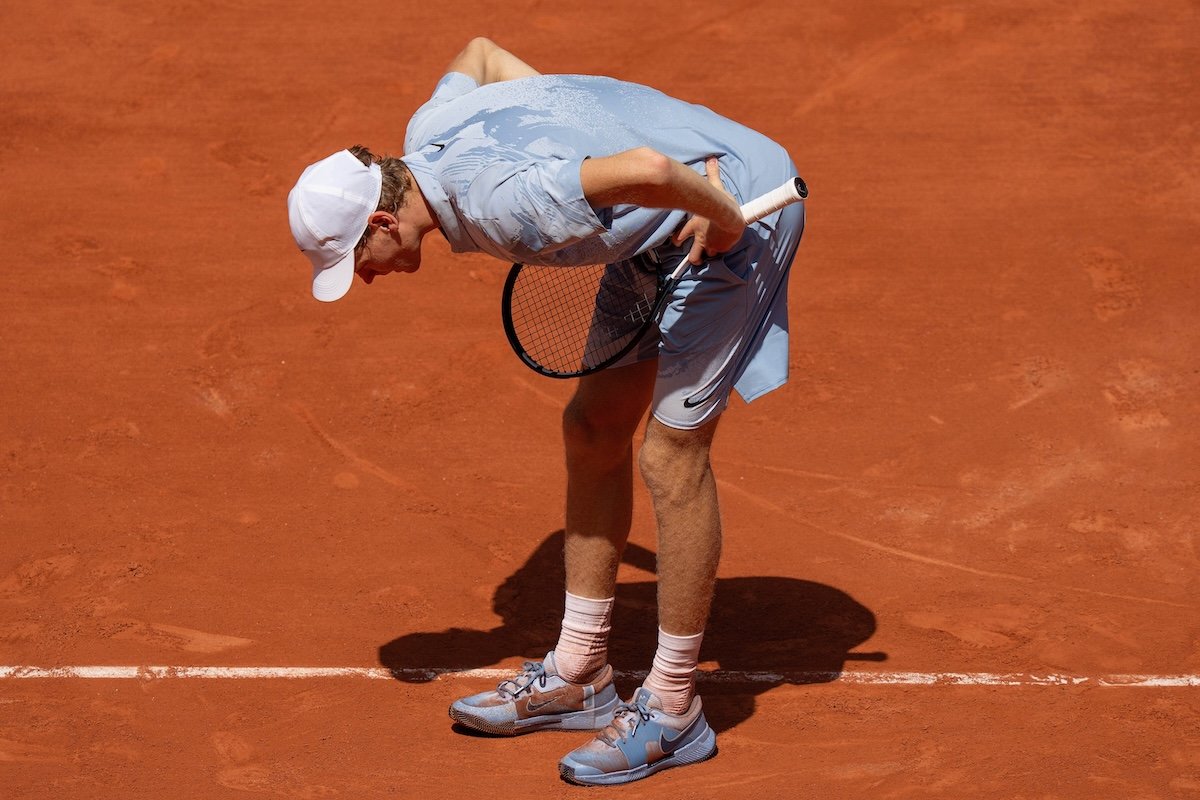
- May 28: On a blisteringly hot day at Roland-Garros, Sinner falls in a five-set loss against Juan Manuel Cerundolo. It’s the biggest upset of the tournament.
How the French Open prediction market works
You can buy contracts on any player competing in the 2026 French Open.
It’s possible to buy a share in a player to win the tournament, but also not to win. By backing a player not to win, you’re essentially backing anyone else in the field to lift the trophy.
At online prediction markets, traders offer shares based on their own opinion.
For example, you could have bought one share of Jannik Sinner to win at $0.20 before the French Open began. That means the trader offering a share believes there’s roughly a 20% chance that Sinner will win.
All shares resolve at $1.00. Therefore, if you bought a share in Novak Djokovic at $0.14 and he won, you’d earn $0.86 profit.
Prediction markets work differently from online sportsbooks, where odds are fixed. Though you can cash out some sports bets, the prices are set by the bookmaker. Prediction market prices are always decided by the customers.
What you can learn from volatile prediction markets
Jannik Sinner’s French Open loss perfectly illustrates why you need to keep up to date when you trade event contracts.
You may have bought ‘Yes’ shares in Sinner at $0.50 before letting the Italian do his work. However, if you weren’t watching his Round 2 match, you would have missed his complete capitulation.
In fact, Sinner was up two sets and 5-1 in the third before becoming tired and dizzy on court. You could have sold your French Open shares there and then to lock in a profit.
However, if you had waited, you would have witnessed the Cerundolo comeback. With it, traders would have been rapidly selling their positions, trying to lock in a profit.
By the time Sinner was down 3-0 in the fifth set, his price to win the French Open had slumped to just $0.09. By then, if you’d just turned on, it would have been too late to trade out.
Final thoughts
Trading prediction market contracts can be volatile and not for the faint-hearted. You have to be locked into a market if you have money riding on it. That’s particularly true if the market swings wildly day to day, and you stand to lose money if you aren’t paying attention.
Prediction markets offer a range of tools that can help you limit both wins and exposure. Start small, only purchase a few shares to begin, and always check the price while the market is live.