Donald Trump Backs CFTC Over States, Calls Regulators 'Scum'

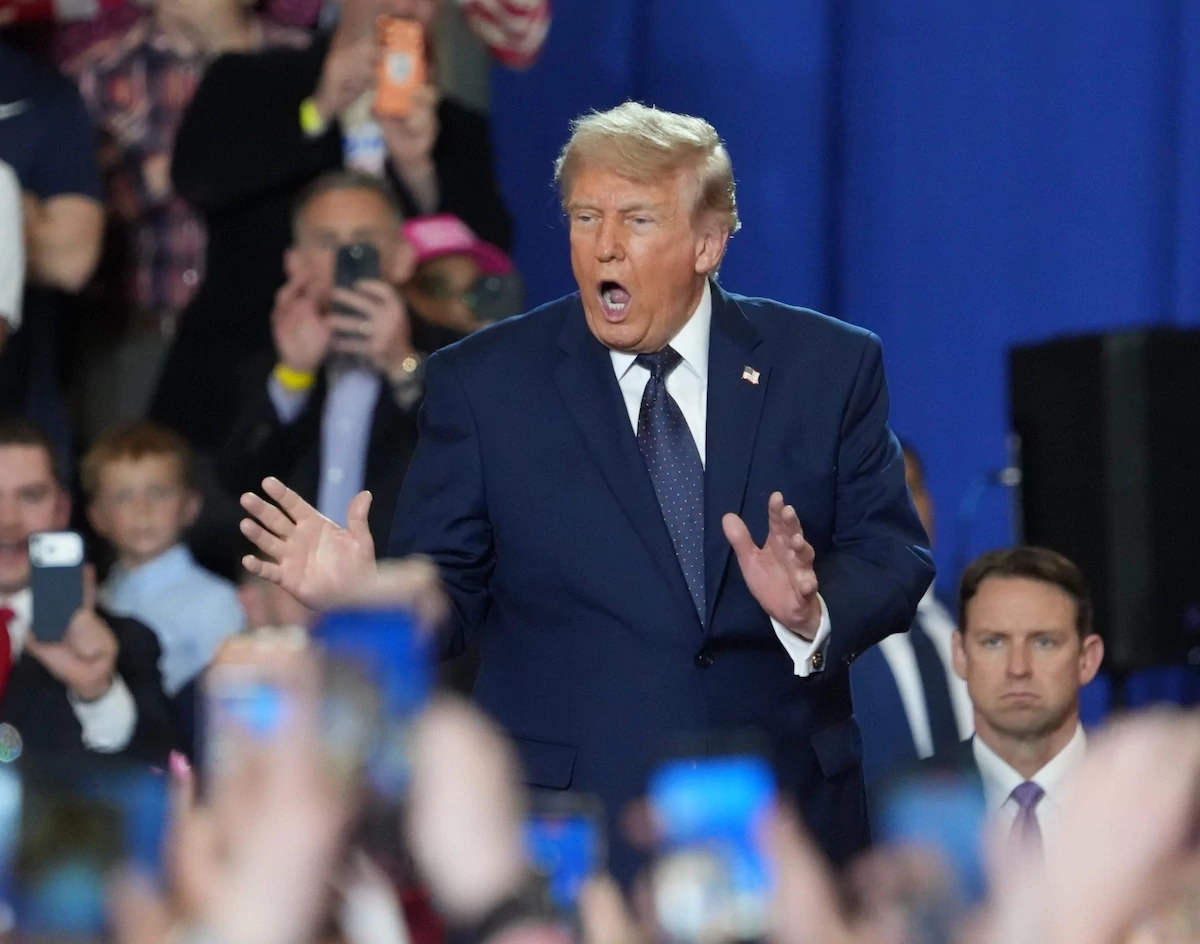
President Donald Trump has hit out at state regulators over their handling of federally regulated prediction markets.
The CFTC has been in a tit-for-tat war with states over who regulates controversial prediction markets. Now, it seems that the POTUS has come out swinging on the CFTC’s side.
At a Glance:
- “We must protect” prediction markets, says Trump
- POTUS labels state regulators “scum” in fiery online tirade
- CFTC has sued several states this year over regulatory clashes
- Arizona and New Jersey among states to fight prediction markets
Donald Trump hits out at ‘scum’ state governors
In a characteristically fiery social media post, the president sided with the CFTC in their legal battles with state gambling regulators.
“Under my leadership,” he said on Truth Social, “we are setting ‘rules of the road’ that are the Gold Standard for the States.
“We cannot have SCUM like Chris Christie, Letitia James, Tim Walz, and JB Pritzker setting the rules!”
Trump went on to praise the chairman of the CFTC (Commodity Futures Trading Commission), Mike Selig, saying he was “doing a great job.”
However, several governors have hit back.
How prediction markets work
Online prediction markets like Polymarket operate like share-derivative platforms rather than online sportsbooks.
Traders can open contracts on everything from the next Republican presidential nominee to the winner of the U.S. Open.
You purchase a share in whether you think an outcome will or won’t happen. So, if you bought a share at $0.65 that Jannik Sinner wins Wimbledon, you’d win $0.35 (each share resolves at $1), if he were successful (he wasn't).
You can also bet that an outcome will not happen. Therefore, a ‘No’ on Sinner at $0.35 would win you $0.65 per share ($1 minus $0.35).
The difference between online sportsbooks and prediction markets is that traders set the price in prediction markets. Plus, you have the option to sell back shares later on if the price shifts. That means smart traders can buy contracts and profit before the event ends.
The states vs. the CFTC
The CFTC has been in a back-and-forth battle with several U.S. states this year.
States that have fought to legalize sports betting argue that prediction markets constitute online gambling rather than share trading.
The CFTC disagrees and enjoys federal regulatory powers over platforms like Kalshi.
In May, Arizona was blocked from charging Kalshi on gambling offenses. The state was the first in the U.S. to bring charges against one of the world’s biggest prediction platforms.
Meanwhile, other states, such as New Jersey, have issued cease-and-desist notices to prediction market operators. The CFTC has fired back with lawsuits, warning states to get off its turf.
White House connections with prediction markets
President Trump’s attack comes amid increased scrutiny of the White House’s connections to prediction markets.
In March, an email was sent to White House staff warning them not to profit from prediction markets by betting on political events.
In January, a U.S. soldier won $436,000 betting that the Venezuelan president would be ousted. The U.S. launched an operation the same week, storming Caracas and removing Nicolás Maduro.
Certainly, state governors in the president’s firing line were keen to hit back.
“Illinois took action to prevent and ban insider trading with online prediction markets in our state,” Gov. Pritzker said.
“The most corrupt President in our nation’s history wants to make sure states like ours can’t regulate prediction markets so his family and administration can keep profiting.”
Trump family has skin in the game
Additionally, prediction market giant Polymarket received an enormous investment in 2025 from 1789 Capital, a firm backed by the president’s son, Donald Trump Jr.
It’s clear that the Trump family has an interest in the burgeoning prediction market industry.
How Trump Sr. will respond when the Supreme Court is likely to rule on prediction market regulation is anyone’s guess.